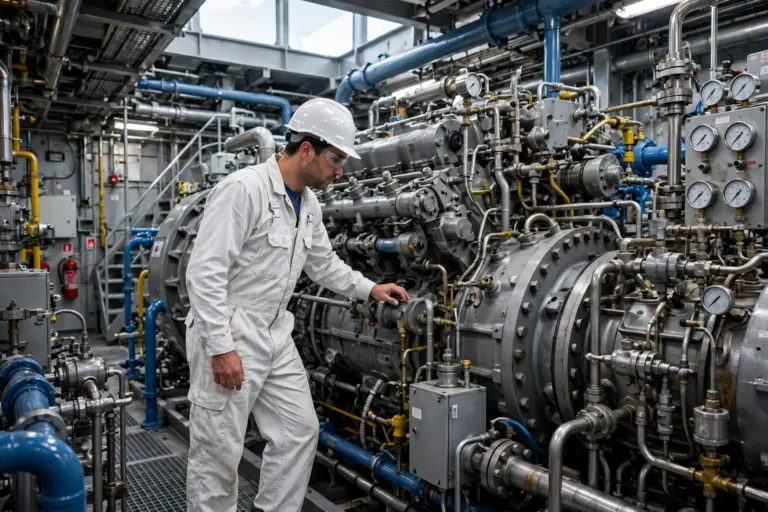
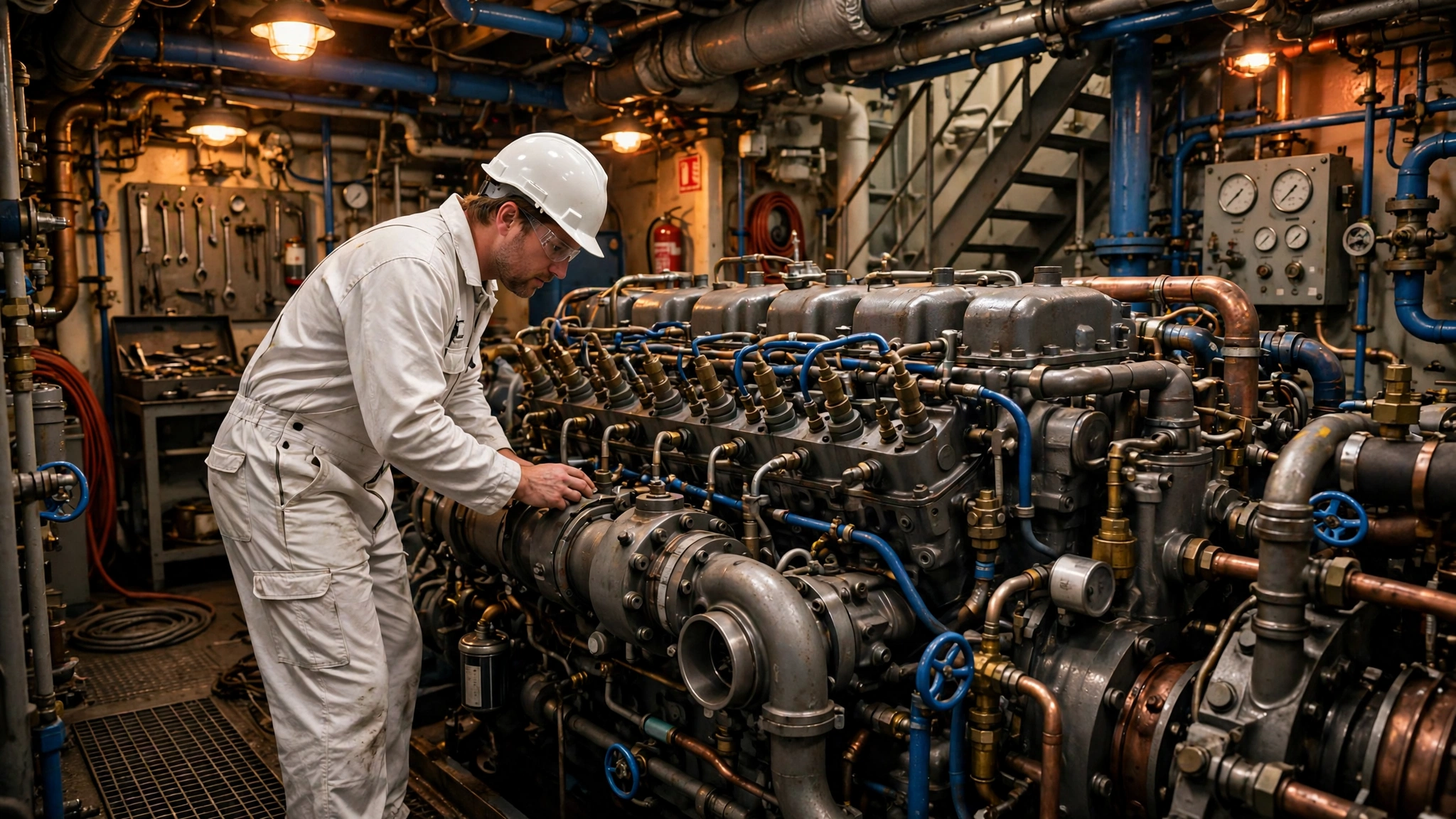

Second Engineer (2/E) is the Chief Engineer’s right hand — the engineer officer who runs the engine room day to day, from main engine operation to planned maintenance and supervising the engine watch team. On many ships, the Second Engineer is the one most often down on the engine-room floor, while the Chief Engineer handles management and technical administration. The pay sits one step below the Chief Engineer, but still far above junior engineer officers. Here is the Second Engineer salary breakdown per month in 2026.
Average Second Engineer Salary: US$8,200 per Month
Rynda Crewing’s November 2026 vacancy data puts the median Second Engineer offer at US$8,200 per month (2,070 vacancies, August–October 2026). Maritime Zone records an average Second Engineer salary of US$9,028 per month in October 2026, while jobmarineman.com places the overall Second Engineer range at US$6,000–15,000 per month. Individual offers vary widely — from around US$5,500 on general cargo ships to above US$15,000 on LNG carriers — depending on ship type, propulsion system, and experience. As a floor: any foreign-going Second Engineer offer below US$5,000 per month should be treated with suspicion, since it sits far below the lowest verified median (general cargo US$7,200/month) and only slightly above the ITF minimum reference for this rank (US$2,111 all-in). Second Engineer contracts are typically 4±1 or 6±1 months (jobmarineman).
Second Engineer Salary by Ship Type (2026 Estimates)
The figures below are estimated total monthly earnings (basic wage + average allowances) based on 2026 vacancy data:
| Ship Type | Estimate per Month | Notes |
|---|---|---|
| LNG/LPG carrier | $11,000 – $15,000 | Highest; Rynda median $12,000/month (middle half $8,100–15,000), Maritime Zone up to $16,494/month |
| Oil & chemical tanker | $9,000 – $13,500 | Rynda medians: chemical tanker $11,000, oil tanker $10,500/month |
| Offshore (DP vessel) | $8,000 – $14,000 | Rynda median $7,500 from a small sample (13 vacancies); drilling ships can pay far more on day rates |
| Container ship | $7,600 – $11,500 | Rynda median $7,600/month; Maritime Zone average $7,803/month; ULCV $8,500–11,500/month |
| Bulk carrier | $7,000 – $8,500 | Rynda median $7,800/month; Maritime Zone average $7,623/month |
| Reefer | $7,500 – $8,500 | Rynda median $7,900/month |
| Ro-Ro / car carrier | $7,000 – $8,500 | Rynda median $7,500/month |
| General cargo / multipurpose | $5,500 – $8,000 | Rynda median $7,200/month (middle half $5,250–7,700); Maritime Zone averages $6,129–7,900/month |
For comparison, Rynda Crewing records a median Second Engineer offer of US$8,200/month from 2,070 vacancies in August–October 2026. See also the rank above in Chief Engineer salary 2026, the deck-side equivalent in Master salary 2026, and all ranks in the seafarer salary guide 2026.
What a Second Engineer Does Day to Day
The Second Engineer is the engine room’s operational lead — the Chief Engineer decides, the Second Engineer makes sure the machinery runs:
- Engine-room operation. Supervising the main engine (MAN B&W, Wärtsilä, WinGD), generators, boilers, and auxiliary systems during the voyage; leading the engine watch and handling operational faults.
- Planned maintenance. Running the Planned Maintenance System (PMS) — scheduled overhauls, spare-parts replacement, and Engine Log Book entries — and reporting to the Chief Engineer.
- Fuel and bunkering. Assisting the Chief Engineer during bunkering, monitoring daily fuel consumption, and safeguarding bunker quality; on LNG carriers, also overseeing the cargo system and reliquefaction plant.
- Engine team supervision. Setting watch schedules for the Third and Fourth Engineers, the ETO, and engine ratings; training junior engineers and enforcing safety procedures in the engine room.
- Emergency repairs. First responder when machinery breaks down, during a blackout, or an engine-room fire — the Second Engineer leads the repair on the floor until the Chief Engineer takes over the bigger decisions.
Requirements to Become a Second Engineer
- CoC STCW III/2 (Second Engineer, management level). In Indonesia known as ATT-II — the main requirement for promotion from Third Engineer.
- Service as Third Engineer. Watchkeeping service as an engineer officer (engineer officer in charge of a watch) before promotion to Second Engineer; the required sea service depends on the training route.
- Segment endorsements. Tankers need V/1-1 (advanced oil/chemical), gas carriers need V/1-2, offshore vessels need a DP certificate — and modern LNG carriers require dual-fuel experience (ME-GI / X-DF), which is what separates a $7,000 offer from a $15,000 one.
- High voltage and advanced safety. A high-voltage (HV) certificate is now almost mandatory on large container ships (ULCV) and modern LNG carriers; AFF, MFA, and SCRB remain mandatory.
- English and technical leadership. The Second Engineer leads the engine watch team and coordinates with the bridge and shore superintendents — a good Marlins/CES score and a clean maintenance record are standard at many companies.
Second Engineer Pay Structure
- Basic wage — the base salary; the ITF minimum reference (ITF ILO Minimum Wage Scale 2026) for Second Engineer is US$1,202 basic and US$2,111 all-in, while the market pays far above it.
- Fixed salary, no hourly overtime. Like the Chief Engineer, most Second Engineers are paid a fixed monthly salary — overtime is already included in the package, not counted per hour.
- Leave pay — leave compensation accumulated during the contract.
- Special allowances — gas, DP, high-power, or high-risk trading-area allowances at some companies.
Always ask for the written pay breakdown before signing a contract — never judge an offer by a single “salary per month” figure.
4 Factors That Change a Second Engineer’s Pay
- Ship type and propulsion. Gas carriers with dual-fuel engines (ME-GI / X-DF) and DP vessels pay most in the Second Engineer class.
- Experience as Second Engineer. A first-time Second Engineer usually starts at the bottom of the range; an experienced one with a clean maintenance record negotiates the top — especially on the same ship or in the same segment.
- Endorsements held. A Second Engineer with a gas endorsement (V/1-2), dual-fuel experience, or a DP certificate commands far more than a dry-cargo Second Engineer.
- Flag and CBA. Ships under ITF/IBF agreements generally pay above the minimum — see our ITF/IBF/ILO wage standards explainer.
Career Path: from Second Engineer to Chief Engineer
- Second Engineer → Chief Engineer. The normal route is clear: several years of service as Second Engineer, then promotion to ATT-I (Chief Engineer) — the biggest pay jump in the engine department, from a median of US$8,200 to US$10,000 per month.
- Specialist track. A gas-carrier Second Engineer can climb the gas specialist ladder; a DP Second Engineer can move into a long-term offshore career.
- Fleet management track. Engine-room leadership experience opens the door to Technical Superintendent, Fleet Manager, and Designated Person Ashore (DPA) roles later on.
How to Check Whether an Offer Is Fair
- Compare with the market floor: a foreign-going Second Engineer offer below US$5,000/month is not reasonable.
- Ask for it in writing: basic wage, allowances, and leave pay must appear in the Seafarer Employment Agreement.
- Watch for unclear deductions: a contract allowing unilateral deductions without a clear mechanism is a red flag.
- Check the ship’s flag: read our flag state explainer before sign-on.
- Beware of job scams: engineer officer ranks are prime targets for brokers because the pay is high — read the seafarer job scam red flags before paying anything.
Prepare your CV before applying: read our seafarer CV guide — or if you want help writing one, chat with us on WhatsApp at +62 896-5739-1260.
Sources: Rynda Crewing — Second Engineer Salary at Sea 2026 (median US$8,200/month, 2,070 vacancies August–October 2026; medians: gas carrier US$12,000, chemical tanker US$11,000, oil tanker US$10,500, reefer US$7,900, bulk carrier US$7,800, container ship US$7,600, offshore US$7,500, Ro-Ro US$7,500, general cargo/multipurpose US$7,200; October vs August +2.8%); Maritime Zone — Second Engineer salary data November 2026 (October 2026 average US$9,028/month; container US$7,803, heavy lift US$8,759, general cargo US$6,129, multipurpose US$7,900; LNG & LPG up to US$16,494/month); jobmarineman.com — Second Engineer page 2026 (overall $6,000–15,000; LNG/LPG $11,000–15,000, tanker $9,000–13,500, container ULCV $8,500–11,500; standard contracts 4±1 or 6±1 months); MarineInsight — Duties of the 2nd Engineer in the Merchant Navy (VLCC/LPG/LNG $10,000–12,000+, crude/products tanker $7,500–11,400, bulk $7,000–8,000, container $7,000–8,000, chemical $6,000–12,000, offshore $8,000–30,000+); ITF ILO Minimum Wage Scale 2026 (Second Engineer: basic US$1,202, all-in US$2,111).