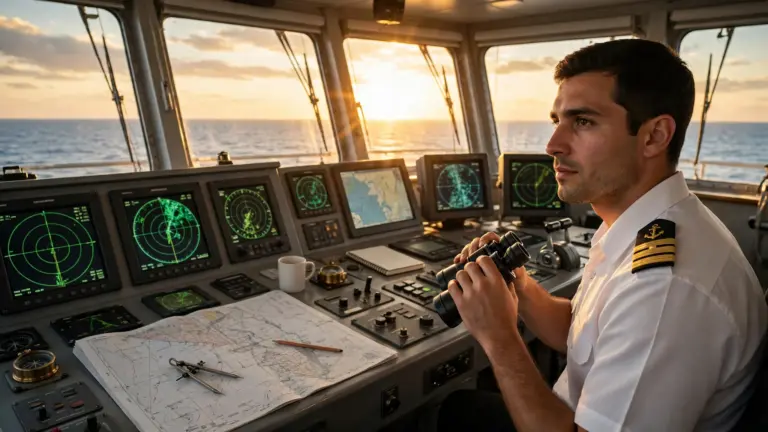
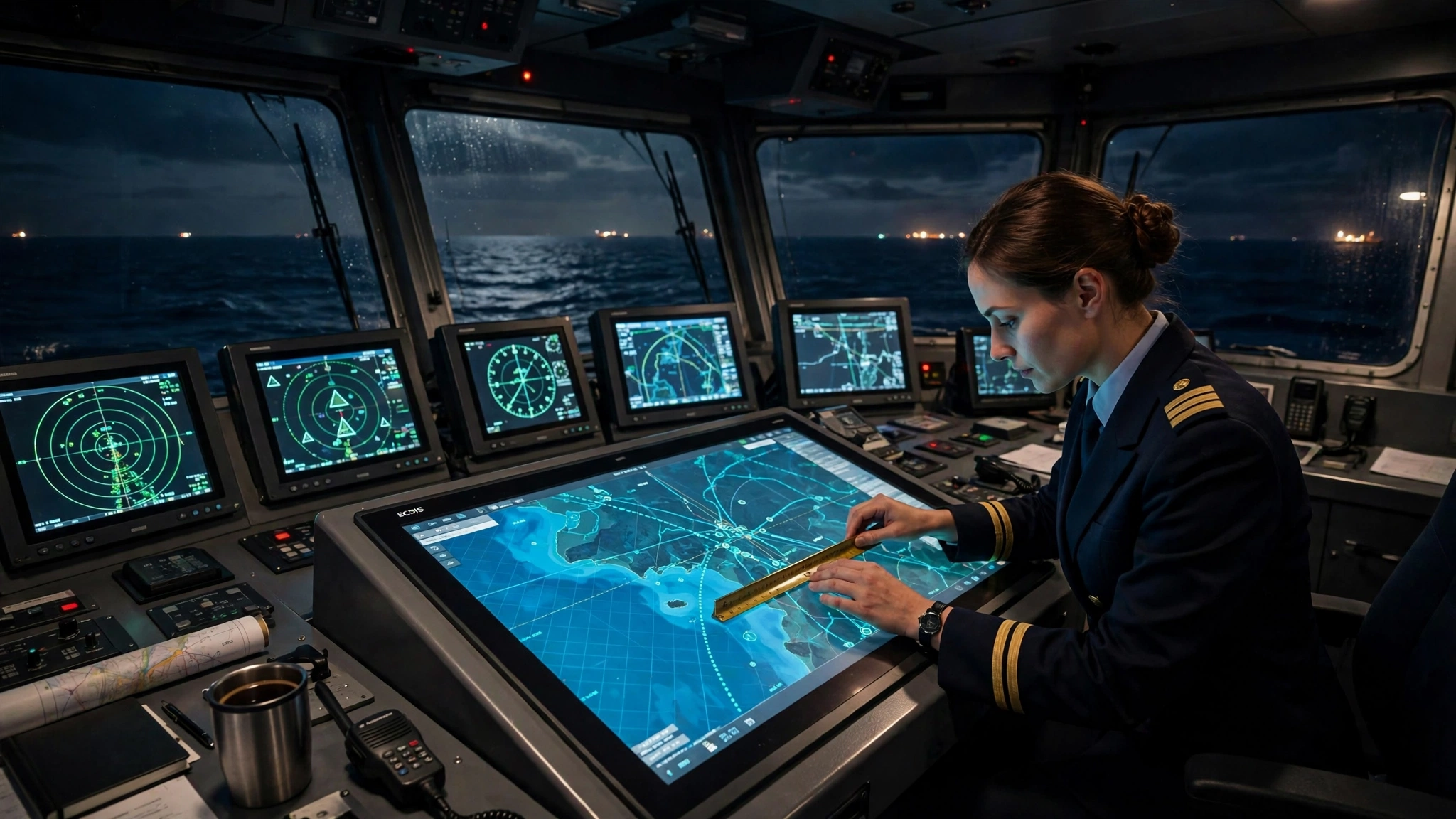

Second Officer (2nd Officer) is the deck officer below the Chief Officer and above the Third Officer — the rank that owns the ship’s voyage planning. The job covers passage planning, chart and ECDIS corrections, navigational equipment, and bridge watchkeeping. One step above 3/O, the pay jumps significantly — especially on gas carriers and offshore vessels. Here is the Second Officer salary breakdown per month in 2026.
Average Second Officer Salary: US$4,271 per Month
Maritime Zone’s October 2026 vacancy data puts the average Second Officer offer across the merchant fleet at US$4,271 per month (September 2026 average). Individual offers vary widely — from around US$3,800 on general cargo ships to US$9,000 on LNG carriers and DP offshore vessels — depending on ship type, endorsements, and experience. As a floor: any foreign-going Second Officer offer below US$3,500 per month should be treated with suspicion, since it sits far below the 2026 market range.
Second Officer Salary by Ship Type (2026 Estimates)
The figures below are estimated total monthly earnings (basic wage + average overtime) based on 2026 vacancy data:
| Ship Type | Estimate per Month | Notes |
|---|---|---|
| LNG/LPG carrier | $6,500 – $9,000 | Highest; SIGTTO endorsement and gas familiarisation required |
| Offshore (DP vessel) | $5,500 – $8,500 | DP Certificate (Limited/Unlimited) sets the pay |
| Oil & chemical tanker | $5,000 – $7,500 | SIRE 2.0 and CDI inspection experience valued |
| Container ship | $4,500 – $6,500 | Stable liner routes; ECDIS, BTM/BRM required |
| Bulk carrier | $4,500 – $6,000 | October 2026 vacancies: $4,000 – $4,250 |
| General cargo / multipurpose | $3,800 – $5,500 | Maritime Zone average $4,159/month |
| Cruise ship | ±$4,500 | Maritime Zone average, September 2026 |
| Ro-Ro | ±$4,180 | Maritime Zone average, September 2026 |
For comparison, Maritime Zone records a September 2026 average Second Officer offer of US$4,271/month, with LNG carriers and platform supply vessels offering up to US$7,311/month. Real October 2026 vacancies confirm the range: a 2/O VLCC post at US$5,250/month, a 2/O LPG post at US$4,600/month, and a 2/O crude oil tanker post at US$4,500/month. Compare with the deck rank below in Third Officer salary 2026 and all ranks in the seafarer salary guide 2026.
What a Second Officer Does Day to Day
The Second Officer is the ship’s “navigation brain” — the Chief Officer handles cargo, the Second Officer handles where the ship goes:
- Voyage planning (passage planning). Building the port-to-port passage plan under SOLAS Chapter V — route, waypoints, navigational hazards, and contingency plans.
- Navigational watchkeeping. 8 hours on the bridge (typically 00:00–04:00 and 12:00–16:00), monitoring position, traffic, and weather.
- Chart and ECDIS corrections. Keeping electronic charts, ENCs, and navigational publications up to date before every voyage.
- Navigational equipment. Gyro compass, radar, AIS, echo sounder, and speed log are this officer’s responsibility — checked and calibrated regularly.
- Port watches. Supervising ship security and operations alongside, per the watch schedule.
Requirements to Become a Second Officer
- CoC STCW II/1 (OICNW) + watchkeeping service as 3/O. The same certificate as a Third Officer — promotion to 2/O needs watchkeeping experience, typically 12 months of service as Third Officer.
- ECDIS and GMDSS. Generic and type-specific ECDIS certificates; a GMDSS (GOC) certificate is almost always required for 2/O.
- Basic Safety Training (STCW VI/1), AFF, MFA, SCRB. The mandatory safety certificate package for deck officers.
- English. Bridge communication and ship documents are in English — a Marlins/CES score above 60% is standard at many companies.
- Segment endorsements. Gas carriers need V/1-2 and SIGTTO, tankers need V/1-1, offshore vessels need a DP certificate — these endorsements are what separate a $4,000 offer from an $8,000 one.
Second Officer Pay Structure
- Basic wage — the base salary; the ITF reference for 2/O is around $3,795, while the LNG and offshore market pays far above it.
- Overtime — hourly overtime; port watches and extra navigational work add significant overtime hours.
- Leave pay — leave compensation accumulated during the contract.
- Special allowances — gas, DP, or high-risk trading-area allowances at some companies.
Always ask for the written pay breakdown before signing a contract — never judge an offer by a single “salary per month” figure.
4 Factors That Change a Second Officer’s Pay
- Ship type. Gas carriers and DP offshore vessels pay most in the 2/O class because of extra certification and standards.
- Endorsements held. A 2/O with a DP Unlimited certificate or a gas endorsement (V/1-2) commands far more than a dry-cargo 2/O.
- Experience as 2/O. A newly promoted 2/O usually starts at the bottom of the range; an experienced 2/O with a clean record negotiates the top.
- Flag and CBA. Ships under ITF/IBF agreements generally pay above the minimum — see our ITF/IBF/ILO wage standards explainer.
Career Path: from Second Officer to Captain
- Second Officer → Chief Officer. Requires a management-level CoC (STCW II/2) and strong cargo-operations experience.
- Chief Officer → Master. The top of the deck ladder; from 2/O to captain typically takes 8–12 years of sea service.
- Specialist track. A 2/O with a DP certificate can move into a long-term offshore career; a gas-carrier 2/O can climb the gas specialist ladder.
How to Check Whether an Offer Is Fair
- Compare with the market floor: a foreign-going 2/O offer below US$3,500/month is not reasonable.
- Ask for it in writing: basic wage, hourly overtime rate, leave pay, and allowances must appear in the Seafarer Employment Agreement.
- Watch for unclear deductions: a contract allowing unilateral deductions without a clear mechanism is a red flag.
- Check the ship’s flag: read our flag state explainer before sign-on.
- Beware of job scams: officer ranks are prime targets for brokers because the pay is high — read the seafarer job scam red flags before paying anything.
Prepare your CV before applying: read our seafarer CV guide — or if you want help writing one, chat with us on WhatsApp at +62 896-5739-1260.
Sources: Maritime Zone — Second Officer salary data October 2026 (September 2026 average US$4,271/month; LNG & platform supply vessels up to US$7,311/month; container average US$3,982/month; multipurpose average US$4,159/month; Ro-Ro average US$4,180/month; passenger vessel average US$4,500/month); jobmarineman.com — Second Officer vacancy page 2026 (2/O salary ranges by ship type: LNG $6,500–9,000, offshore DP $5,500–8,500, oil & chemical tanker $5,000–7,500, container $4,500–6,500, bulk $4,500–6,000, general cargo $3,800–5,500); crewbase.pro — Maritime Salary Guide 2026 (ITF reference 2/O $3,795, market $4,500–7,000); 2/O vacancies October 2026 via Crewell (VLCC $5,250, bulk $4,000–4,250, LPG $4,600, crude oil tanker $4,500).